9 products
Thai Chili Pastes – Nam Prik
Nam Prik in Thailand is what the spice jar on the table is here: the bowl from which everyone seasons their own food. It's just as good in a hot pan, as a base for fried rice or stir-fries. Six varieties, produced in Bavaria according to traditional recipes.


Chili Pastes Compared
| Chili paste | Spiciness level | Taste | Usage | Features |
|---|---|---|---|---|
| Nam Prik Pao with pork | 2 of 5 | smoky, sweetish, lots of umami | Dip, sear, spoon into the Tom Yam | The most accessible variety |
| Nam Prik Pao Sam Het (Mushrooms) | 3 out of 5 | earthy, smoky, sweet and spicy | Noodles, rice, soups, spreads | Vegan |
| Nam Prik Tadaeng Prasaba (Fish) | 4 out of 5 | salty-spicy, mackerel, slightly sweet | Side dish for rice and raw vegetables | With mackerel fillet |
| Nam Prik Pao Extra Hot | 4 out of 5 | smoky-sweet, significantly hotter | like Nam Prik Pao, for the chili-experienced | Sharper version of the classic |
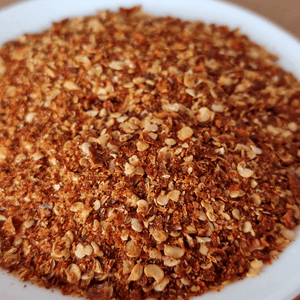
| Nam Prik Narok Gung (Shrimp) | 5 out of 5 | Sweet and sour, umami, extra hot | about rice, noodles, scrambled eggs | "Chilli paste from hell", dry |
| Nam Prik Plaraplasaba (Mackerel) | 3 out of 5 | intensely salty, roasted, very spicy | Isan cuisine, with sticky rice and vegetables | Dry consistency |
Nam Prik, Thailand's Most Versatile Chili Paste
What is Nam Prik?
Nam Prik is a Thai chili paste. The name is composed of "Nam" for liquid and "Prik" for chili, and both describe it well: depending on the variety, the consistency ranges from thick and oily to almost dry and grainy.
The base consists of chilies, garlic, and shallots. Depending on the recipe, tamarind is added for acidity, palm sugar for sweetness, and shrimp paste or fish sauce for a salty umami note. Traditionally, the ingredients are pounded in a mortar, not pureed, which is why Nam Prik retains a noticeable texture.
In Thailand, Nam Prik is part of every meal, usually in a small bowl next to the main dish. There are countless regional and family-specific variations. The best known are Nam Prik Pao, made from roasted chilies with a smoky-sweet note, Nam Prik Kapi, based on fermented shrimp paste, and Nam Prik Narok, the "chili paste from hell," which owes its name to its spiciness.
For us, this means: We use shrimp paste and fish sauce where they traditionally belong, and only omit them where the recipe allows. Our Nam Prik Pao Sam Het with mushrooms is therefore vegan, while the other varieties are not.
Dipping, seasoning, frying: how to use Nam Prik
At the table: A spoonful next to the plate, with fresh or steamed vegetables, meat, or fish. This is how Nam Prik is most commonly eaten in Thailand, and everyone determines their own level of spiciness.
In the pan: Nam Prik can be stir-fried like a curry paste. Briefly heat a teaspoon in a little oil until the aroma rises, then add meat, vegetables, or cooked rice. For Khao Pad Nam Prik, fried rice with chili paste, you don't need more than that. In stir-fries and fried noodles, a spoonful of Nam Prik replaces a whole range of individual ingredients.
In soups and salads: A spoonful of Nam Prik Pao is the base of every Tom Yam and adds depth and color to Yam salads.
On bread: The milder varieties work as a savory spread on toast or baguette.
Important when frying: Nam Prik contains sugar and quickly becomes bitter if the heat is too high. Medium heat is sufficient; thirty seconds in the oil are enough before adding the other ingredients.